Illustrator
You have one finished image and want to explore how movement could change its presentation.
Plan a short motion concept while keeping the original image available for comparison.
mindvideo ai image to videoCreation access
If you searched for the mindvideo ai app, start with the video you want to make rather than assuming you need a phone download. Mindvideo can help you frame that decision; the creation link opens a separate service, where you should check its current tools and access requirements.

These starting points connect a creator's existing material to a practical next step. They describe workflows to investigate, not guaranteed app features.
You have one finished image and want to explore how movement could change its presentation.
Plan a short motion concept while keeping the original image available for comparison.
mindvideo ai image to videoYou have a scene description but no footage or still image to supply.
Turn the description into a shot brief before checking which generation inputs are offered.
text to videoYou want to build a short sequence around photos you already own.
Select images in story order and decide where captions or transitions would help.
How can I turn my photos into videos?You already have a clip, but its appearance needs attention before sharing.
Assess the source first; improving an existing clip is a different task from generating one.
mindvideo ai enhancerA still can establish the subject, framing, and mood. A proposed video adds a decision about what should move and what should stay consistent.


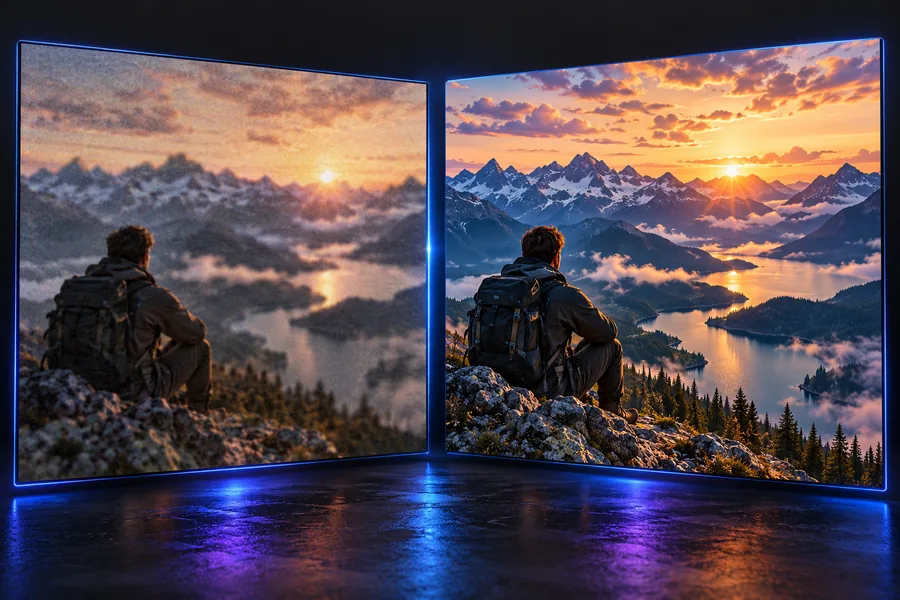
These images illustrate a planning comparison, not a verified Mindvideo output or a promised transformation.
An app search may lead to a download, a mobile website, or another creation service. Compare the access route you actually find against these practical criteria.
Dedicated phone app
Find and verify an official store listing before installing.
Browser-based creation flow
Open the service website and identify its creation entry point.
Dedicated phone app
Check operating-system and device compatibility.
Browser-based creation flow
Check browser support and whether the workspace fits your screen.
Dedicated phone app
Review permissions requested for photos, camera, and files.
Browser-based creation flow
Review what you must upload or enter in the browser.
Dedicated phone app
A phone screen favors short, focused review sessions.
Browser-based creation flow
A larger browser window may make detailed review easier.
Dedicated phone app
Confirm where projects and exports are stored.
Browser-based creation flow
Confirm whether projects persist and how files are retrieved.
Dedicated phone app
Read the listing's publisher and current terms.
Browser-based creation flow
Read the destination service's current terms and access conditions.
Mindvideo is a guide to the workflow here, not proof of what the linked service currently supports.
This page cannot confirm that an official Mindvideo phone app exists for your device or that a similarly named listing is legitimate.
WorkaroundVerify the publisher and official website before installing anything.
This route cannot promise that the destination accepts your image, footage, or prompt, or that it exports the format you need.
WorkaroundInspect the current input controls and export details before preparing a project.
Availability, account requirements, and payment terms may change at the separate creation service.
WorkaroundReview its current terms before uploading material or starting work.
Generated motion may alter faces, objects, timing, or text in ways that do not fit your brief.
WorkaroundKeep the source files and review any result closely before publishing.
A short planning sequence makes it easier to judge whether a video tool suits your project.
Choose a written scene, an image, or existing footage. For Mindvideo research, this first choice matters more than whether the interface is called an app.
Specify the subject, intended movement, camera feel, and what must remain unchanged. Keep a copy of your source so you can compare it with any result.
Follow the creation link, inspect available inputs and terms, then decide whether its current workflow matches your brief. Review any output before using it.
The most useful preparation is often a clear brief: what viewers should notice, and what a finished clip must preserve.

01
When an image is your starting point, note which details define the subject: clothing, product markings, background shapes, or facial features. Ask for one understandable movement rather than several competing actions. Mindvideo planning stays more useful when you can compare the intended motion with an unchanged source.
02
A compelling still does not prove that the whole clip works. Check the opening, the movement between frames, and the ending for continuity. If you approached Mindvideo through an app search, judge the destination by whether it lets you inspect the result well enough for your intended use.
Bring a source file or a concise scene description, then check the linked service's current capabilities and terms. Mindvideo helps you decide what to look for; the destination determines what you can make.
This page does not establish that an official native download exists. If you find an app listing, verify its publisher against an official source and review its permissions before installing it.
Whether a particular creation service works well on your phone depends on its current interface and browser support. Open the destination on your device and check its inputs and preview area before relying on a mobile-only workflow.
Not necessarily. Similar names in search results do not establish shared ownership or identical features. The creation link on this page opens a separate service, so inspect its identity and terms directly.
Have a short description of your subject, the motion you want, and any source material you have permission to use. Decide what a successful result must preserve so you can evaluate the output rather than relying on a single attractive frame.